
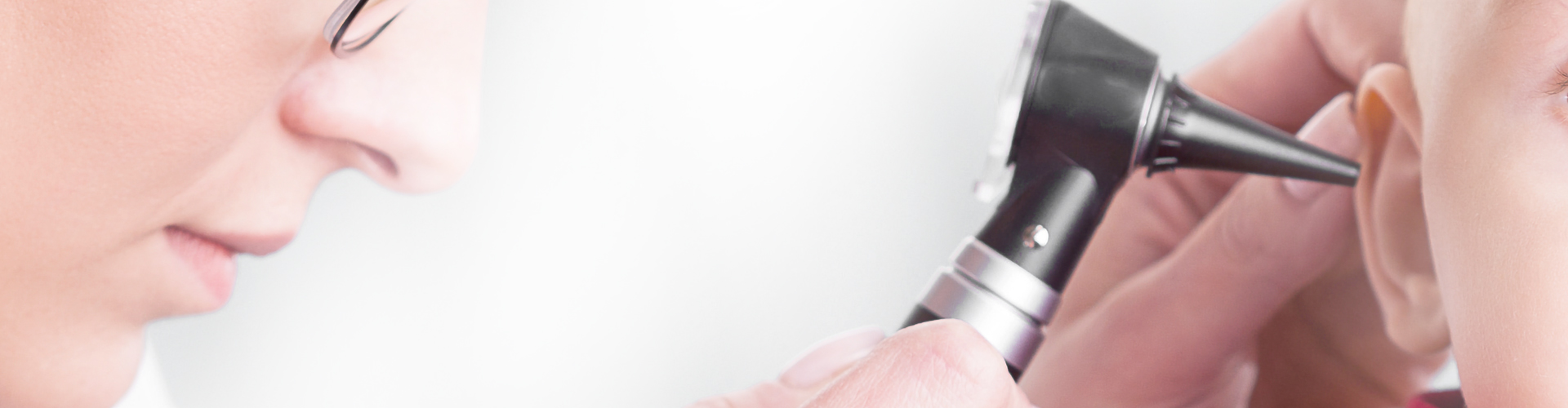
A comprehensive ENT examination includes an inspection of the face, ears, nose, throat and neck.
We routinely assess hearing loss and use pressure testing to examine the eardrum and determine whether there is fluid behind it. The examination is painless.
Endoscopy can be uncomfortable for people with an increased gag reflex. In some individuals, inserting a tube into the throat or nose can cause discomfort. This can be easily addressed by using a local anaesthetic spray, which numbs the mucous membrane very quickly and allows the examination to proceed without difficulty.
What are common ear problems?
- Balance disorders
- Cholesteatoma
- Ear infections
- Ringing in the ears (tinnitus)
- Hearing loss
- Eardrum perforation
How are the ears examined?
The doctor uses an instrument called an otoscope, which has a small funnel-shaped tip with a light. It is inserted into the ear canal to examine the canal and the eardrum.
Can an otolaryngologist examine the thyroid gland?
Based on the patient’s medical history, the doctor may recommend additional tests, such as thyroid hormone tests, with particular emphasis on free hormone levels, as well as an ultrasound examination.
Can COVID affect the ears?
COVID-19 often causes inflammation of the nose and throat. These areas are connected to the middle ear through the Eustachian tube, so both areas are frequently affected by inflammation.
Can the inner ear affect the eye?
What are the symptoms of an underactive thyroid?
Which ear causes vertigo?
What is the difference between dizziness and unsteadiness?
Why can I hear my heartbeat in my ear?
What is ear neuralgia?
Can stress cause inner ear problems?
Can COVID affect the lower limbs?
Can a blocked ear cause “brain fog”?
…and a hundred other questions about the ears, throat and nose, as well as their effects on mental health, are welcome during your examination.