
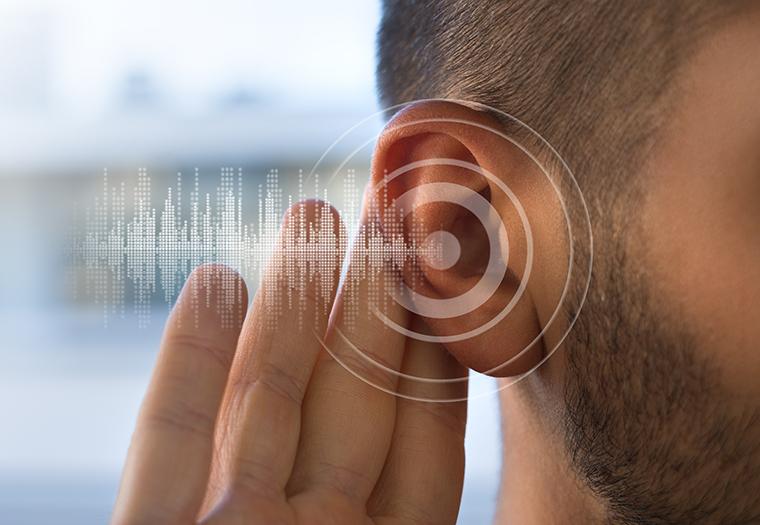
Implantable hearing aids are a new generation of hearing aids that are implanted in cases of severe hearing loss and deafness.
The modern way of life exposes us to constant noise, which is the cause of hearing loss. Increased life expectancy also increases the number of people with senile hearing loss, while excessive use of headphones contributes significantly to hearing loss in young people.
According to the World Health Organization, people with hearing impairment make up more than 10% of the world’s population. It is mainly about hard of hearing people, but the number of deaf people is not negligible. Hearing is the most important sense for the development of the intellect and the most important for communication, much more important than, for example, vision. That is why hearing rehabilitation with the help of hearing aids is extremely important.
Classic and built-in hearing aids
So-called behind-the-ear or in-the-ear hearing aids are the most common hearing aids today. They are used for mild and moderate hearing impairments.
Implantable hearing aids are a new generation of hearing aids that are implanted in the bone that houses the middle and inner ear and under the skin behind the ear. They are implanted in cases of severe hearing loss and deafness. In these cases, implantable hearing aids are more effective and are implanted mainly in children and younger people whose hearing loss or deafness is inherited or the result of a severe ear infection with complications such as meningitis.
Classic hearing aids are electronic devices that work as sound amplifiers. Implants, on the other hand, have a different working mechanism and differ from each other.
Cochlear implant
The best-known hearing implant is the cochlear implant or artificial cochlear, which directly stimulates the inner ear or auditory nerve. Such a device enables complete rehabilitation of the deaf.
The cochlear implant converts sound from the environment into electrical signals that are transmitted via the implanted electrode in the cochlea, bypassing the damaged auditory cells, to the auditory nerve and further to the cerebral cortex responsible for the perception of sound and speech.
It consists of an external and an internal part. The outer part consists of a microphone, a speech processor and a coil, and the inner part consists of a receiver with the aforementioned electrode, which is implanted under the skin behind the ear. The microphone is worn behind the ear and held by a magnet in the scalp above the built-in receiver.
A cochlear implant is the only possible way to rehabilitate the hearing of deaf people and is mainly implanted in children with congenital deafness or severe hearing impairment.
BAHA: bone-anchored hearing aid
The second best-known hearing implant is the BAHA – Bone Anchored Hearing Aid or, in translation, “hearing aid anchored in the bone”. This device transmits sound with the vibrations of the bones of the head, bypassing the eardrum and hearing ossicles. By the vibration of the bone, the sound is transmitted to the inner ear and further along its physiological path through the nerve to the hearing center in the cerebral cortex.
This implant is also installed when classic hearing aids do not help or cannot be worn. For example, in hard-of-hearing people who were born without an ear and ear canal, so they cannot wear a hearing aid, and in patients with chronic ear infections who, due to chronic inflammation, are left without auditory ossicles and eardrums or have damaged their inner ear. They are also implanted in case of damage to the inner ear or nerve due to diseases such as auditory nerve tumor or inner ear injury.
In short, the advantage of hearing implants is that they are effective when ear and ear aids cannot help. The disadvantage is that they have to be surgically implanted, and patients with a cochlear implant require postoperative rehabilitation.
Find more professional advice at the polyclinic for the diagnosis and treatment of ear, nose and throat diseases and for minimally invasive aesthetic surgery of the head and neck in Alba Rubra.
This text was created in collaboration with portal “ADIVA – your portal for health”